Editor's choice
News
Russian attacks on Kyiv and other Ukrainian cities highlights need of strengthening European resolve

Russian attacks on Kyiv and other Ukrainian cities highlights need of strengthening European resolve

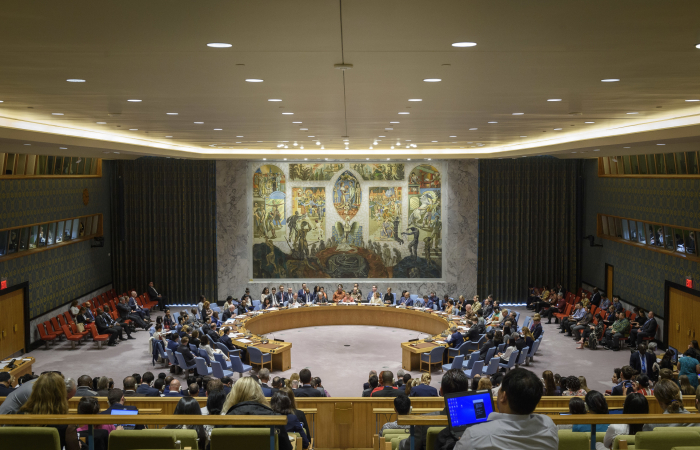
Ukrainian President Volodymyr Zelensky condemned the attack, writing on X that it proved that US and European sanctions against Russia should not be weakened. Russia launched more than 700 drones and missiles at Ukraine in multiple waves overnight from Wednesday to Thursday, killing at least 18 people in what local officials said was the deadliest attack in months. Ukraine's air force said on Thursday morning that Russia had launched 659 drones and 44 cruise and ballistic missiles in the prior 24 hours. It said that 636 drones and 31 missiles had been shot down - but there had been direct hits in 26 locations. (click picture to read more)
Editor's choice
Monday Commentary
Monday Commentary: Despite the bleakness of the current situation, the Gulf must prepare for tomorrow

Monday Commentary: Despite the bleakness of the current situation, the Gulf must prepare for tomorrow

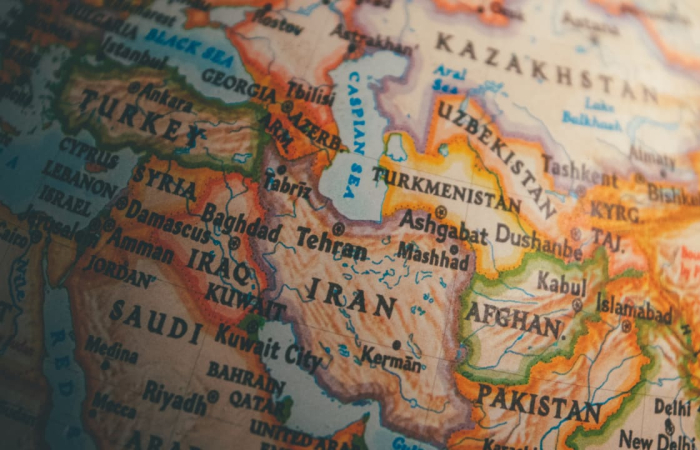
The six Gulf countries members of the Gulf Co-operation Council (GCC), namely Bahrain, Kuwait, Qatar, Oman, Saudi Arabia, and the United Arab Emirates (UAE), have been caught in the war waged by the United States and Israel against Iran since 28 February. Ostensibly, because they host US military facilities, they were relentlessly attacked by Iran in the period before the two-week cease fire, announced a week ago. The Gulf countries have not retaliated, but they made strong requests to Iran to desist. They were very supportive of the efforts to end the conflict, especially the talks hosted by Pakistan in Islamabad over the weekend. The 21 hours of talks were intense, but according to all accounts unsuccessful. But this was the first direct contact at a high political level between Iran and the US since the 1979 Iranian revolution, so their importance should not be underestimated either. The opening of the Strait of Hormuz for unimpeded movement of shipping is a top priority. In resolving this issue the GCC countries must be involved directly. For the six GCC countries the conflict in Iran is not only unwelcome. They tried to stop the war from starting. They face a serious problem, which is not yet existential, but may well change their way of life forever. But, despite the bleakness of the current situation, the Gulf must prepare for tomorrow. Three areas are of importance: Defence and Security; Foreign Policy and National Cohesion. Developing a new security architecture for the Gulf is a long term, ten-year, project. It should not be rushed but neither should complacency be allowed. Thinking and discussion on these issues must start now. This is a testing time for the six GCC countries, but they have internal resilience, and enough financial cushion to weather the storm. And I am sure they also have the creativity and the will to reconstruct, and reconstruct better. (click the picture to read the Commentary in full)

Focus on the South Caucasus

Monday Commentary and Thursday Interview

Editor's choice
Monday Commentary
Monday Commentary: As war in the Middle East rages on, it is necessary to keep sight of the big picture, and seek bold and ambitious solutions

Monday Commentary: As war in the Middle East rages on, it is necessary to keep sight of the big picture, and seek bold and ambitious solutions

The war in the Middle East goes on. Most countries, governments and people think it was unnecessary and unjustified. The person who started it, and who has the power to stop it quickly, Donald Trump, has as much as admitted he had not thought the whole thing through properly. This war has already deformed the Middle East in ways we are just starting to understand. Its negative impact on the world, even if it stops tomorrow are going to be deep and long lasting. Some will despair. But governments, international organisations, and more broadly civil society, do not have this luxury. It is time to rethink, regroup, and develop a future strategy. For that it is necessary to look at the big picture. This is far from easy while the senseless war continues but it is necessary, and all those who can, in their different ways, need to contribute. On 19 March the EU had a summit of the leaders of the 27 member states in Brussels. It was a serious, somber affair, overshadowed by the war in the Middle East, and the political and economic fallout from it. Big decisions were taken. The European leaders also met with the UN Secretary General, Antonio Gutteres. Both the EU and the UN are large organisations, that often look dysfunctional. But for the future if the world, post the Trump war in the Middle East, both are vital  The commitment of both to multilateralism at this precise moment, when the concept appears broken, is welcome. The world must recognize that the present crisis, is the biggest challenge since WWII. The solutions must be equal to the challenge. They must also be bold and ambitious. The EU working with the UN is one of the few, maybe only, actor that can make a difference. But this will require political will and determination. The Brussels EU meeting on 19 March gave a hint of that. But we are not there yet. ---- Monday Commentary will take a two-week Easter break, and will next be published on 13 April 2026. In the meantime however, commonspace.eu will continue to be updated daily. (Click the picture above to read the full Monday Commentary).
Editor's choice
Interview
Thursday Interview: Ambassador Akan Rakhmetullin

Thursday Interview: Ambassador Akan Rakhmetullin

His Excellency Mr. Akan Rakhmetullin is the Ambassador of the Republic of Kazakhstan to the Kingdom of the Netherlands and Permanent Representative to the Organisation for the Prohibition of Chemical Weapons (OPCW). A career diplomat with more than three decades of experience across bilateral and multilateral postings, he has represented Kazakhstan at the United Nations (UN) and the Organization for Security and Co-operation in Europe (OSCE), and played a central role in shaping the country’s multi-vector foreign policy and engagement with international institutions. Speaking to commonspace.eu, Ambassador Rakhmetullin reflected on his experience of representing a newly independent state in the 1990s, Kazakhstan’s ongoing domestic reform agenda, and how internal political changes shape the country’s external posture. He also discussed opportunities for deeper cooperation with Europe, particularly in energy, technology, and agriculture, defended the relevance of multilateral institutions under growing political strain, and explained why Kazakhstan continues to pursue a multi-vector foreign policy aimed at maintaining balanced relations with major powers. (Read the full interview by clicking the image above)

Focus on Central Asia

Focus on Arabia

Editor's choice
Monday Commentary
Monday Commentary: Trump opens Pandora’s box and Ayatollah Khamanei has the last laugh

Monday Commentary: Trump opens Pandora’s box and Ayatollah Khamanei has the last laugh

On Saturday (28 February) the United States and Israel launched a new war, attacking Iran, even though talks between the US and Iran were on-going in Geneva, and Omani mediators thought that an agreement between the two was within reach. In the first engagement of the new war the US and Israel, targeted and killed Ayatollah Khamanei, Iran’s Supreme Leader, and many other Iranian senior officials. The war has raged on for the last few days, and has spread quickly to other countries in the region. It is clear we are at the beginning of something big. This is not a local conflict. It is a conflict with global ramifications, and we are only at the start. It is very difficult to predict the future in such a volatile situation as has emerged since Saturday. There are no simple explanations or solutions. But it is likely that the Islamic Republic will endure. The system may, in order to survive, update itself. This is necessary and overdue. But it will not happen under American and Israeli aerial fire. The Gulf will never be the same again. The relations between Iran and the Gulf countries will be poisoned for a long time. Most GCC countries have the financial cushion to help them pull out of the present crises. But money on this occasion, may not be enough. The war will also impact the Trump administration. This may prove a gamble too far for the American president. But for all three, we are only at the beginning. And this story is only just starting, so in truth, anything can happen. (click the image to read the full Monday Commentary).
Editor's choice
Analysis
Briefing: In the Gulf, the British “peace” ended sixty years ago, but the Saudi “peace” has not yet replaced it

Briefing: In the Gulf, the British “peace” ended sixty years ago, but the Saudi “peace” has not yet replaced it

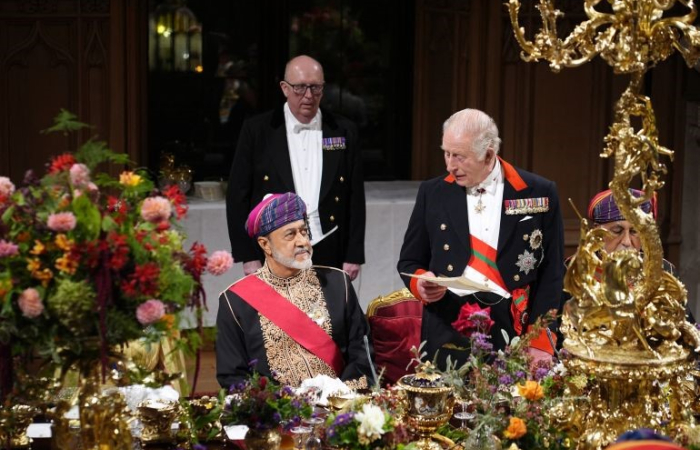
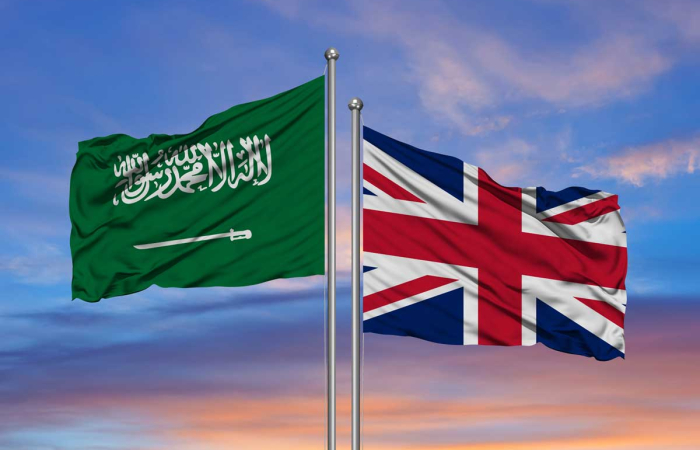
Relations between the Kingdom of Saudi Arabia and the United Arab Emirates have in the last decade, been competitive. Led by two ambitious but visionary men – both named Mohammed: MBS – Mohammed bin Salman, the Crown Prince of Saudi Arabia; and MBZ – Mohammed bin Zayed, the Ruler of Abu Dhabi and president of the Emirates, the two Gulf neighbours embraced many aspects of modernity, and moved hurriedly to turn their countries into global vanguards", writes Dennis Sammut, in this Briefing for Arabia Concise. "Yet up to now, competition was kept within bounds. They cooperated closely in areas of security and presented a united front. They were on the same side when they confronted Qatar and in their opposition to the Houthis' takeover of Yemen. Yet problems had been brewing under the surface for a while, and in the last month they burst into the open." The relations between Saudi Arabia and the United Arab Emirates (UAE) have been increasingly strained as a result of the different approaches of the two countries towards Yemen. The problems between Saudi Arabia and the Emirates are not new. The Kingdom was never happy with the existence of the smaller states on the Arabian peninsula, which, for most of the 20th century, had British “protection”. But the wisdom of MBZ’s father, Sheikh Zayed, the founder of the UAE, and the caution of MBS's uncles, who ruled Saudi Arabia, generally managed the problems outside the public eye. When the British peace ended abruptly in the 1960’s – the British ran out of money – many thought that the Saudi peace would replace it. Sixty years later, it still has not. not only in monetary terms, but also diplomatically. Saudi “Peace” may be tempting, but it comes at a price. The UAE remains vulnerable because of its size, demography and geography; Its wealth may protect it for a while, but it has its limits. The decision of the UAE to break ranks and recognise Israel may have endeared it to the United States. But many inside, as much as outside the country, are not convinced. (You can read the full Briefing by clicking the image above)
LINKS Europe

commonspace.eu is an activity of LINKS Europe Foundation, an independent foundation based in The Hague, The Netherlands. We focus on issues related to European peace and security, Europe's neighbouring regions, including Eastern Europe, the Caucasus and Central Asia; North Africa and the Sahel, the Horn of Africa and the Arabian Peninsula. LINKS Europe is committed to contributing to a better future by increasing understanding of complex foreign policy issues, by promoting dialogue and confidence-building as tools for helping to resolve conflict, and by engaging citizens in the process of building peace and security on the basis of solidarity and mutual respect. Through commonspace.eu, we aim to provide insights and analysis on different topics in our area of interest and a platform for diverse opinions.

Read LINKS Europe's 2025 Annual Review here.

Editor's choice
News
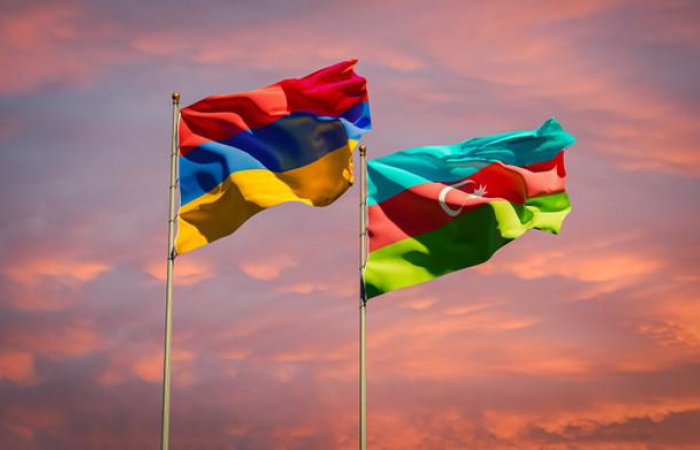
New Armenian-Azerbaijani Dialogue: 42 Armenians and Azerbaijanis set out vision until 2040 in four landmark reports

New Armenian-Azerbaijani Dialogue: 42 Armenians and Azerbaijanis set out vision until 2040 in four landmark reports

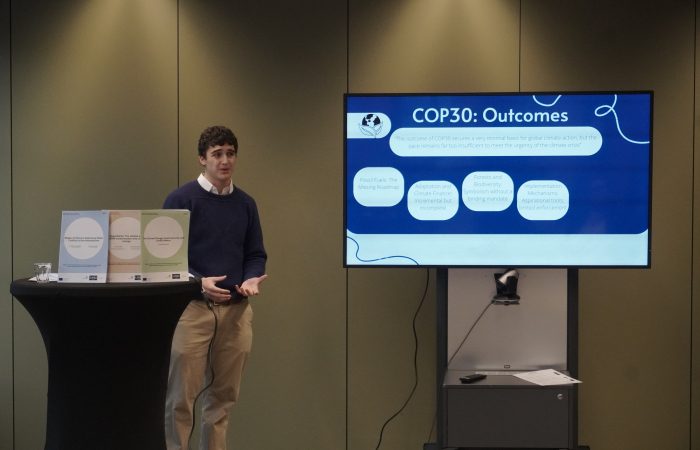
The Thematic Groups for a new Armenian-Azerbaijani Dialogue have produced four reports which set out a vision for relations between Armenia and Azerbaijan, and between Armenians and Azerbaijanis, over the next 15 years. The reports cover four key areas: (1) Peace and Security; (2) Regional Connectivity; (3) Good Governance; and (4) Environment. 42 Armenians and Azerbaijanis were directly involved in preparing the reports as part of the Thematic Groups. Another thirty Armenians and Azerbaijanis contributed to the process. The Thematic Groups were an initiative of LINKS Europe within the framework of EU4Peace 3, a programme supported by the European Union. An ACTION COMMITTEE FOR A NEW ARMENIAN AZERBAIJANI DIALOGUE has now been established, made up of the Chair and Deputy Chairs of the four groups that produced and agreed on the reports. The members of the Action Committee are: Murad Muradov, Leonid Nersisian, Narek Minasyan, Fidan Namazova, Sargis Kharatyunyan, Nigar Gurbanli, Aghavni Kharatyunyan, and Ramazan Samadov.  The first co-chairs of the Action Committee, for the 1st eight month semester are Murad Muradov and Leonid Nersisian. The Action Committee is responsible for the dissemination of the four reports, their eventual updating, and for contributing to the Armenian-Azerbaijani Dialogue and Peace and regional co-operation. LINKS Europe has appointed a Special Advisor to the Action Committee and will provide the Secretariat. The committee will work until December 2027. (click to title to read more or to download the reports)
Editor's choice
Event
LFSC25: Yerevan meeting focuses on issues of landmines and remnants of war in Armenia and the South Caucasus

LFSC25: Yerevan meeting focuses on issues of landmines and remnants of war in Armenia and the South Caucasus

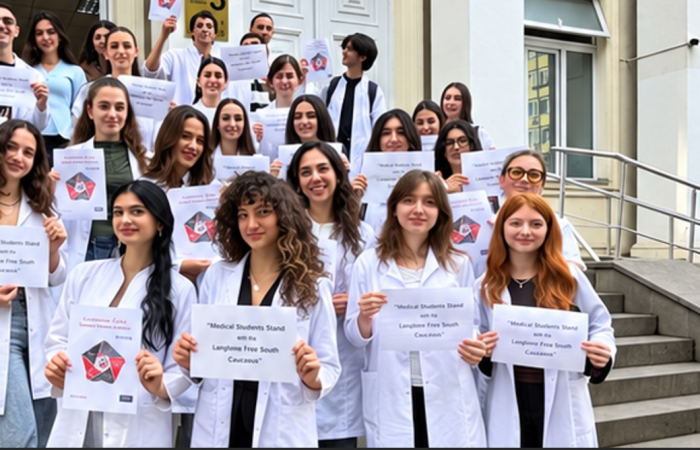
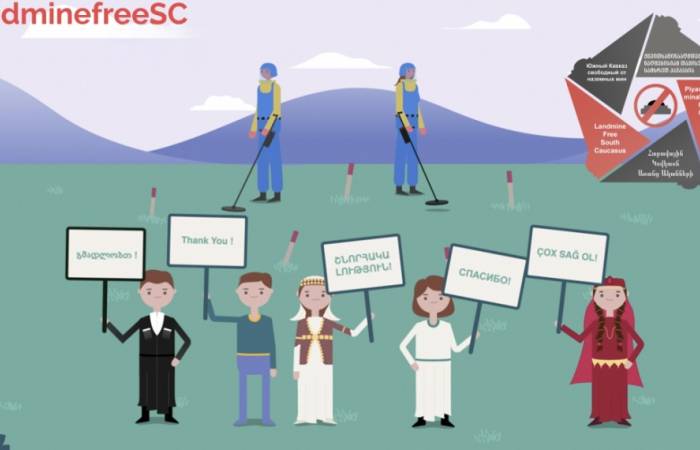
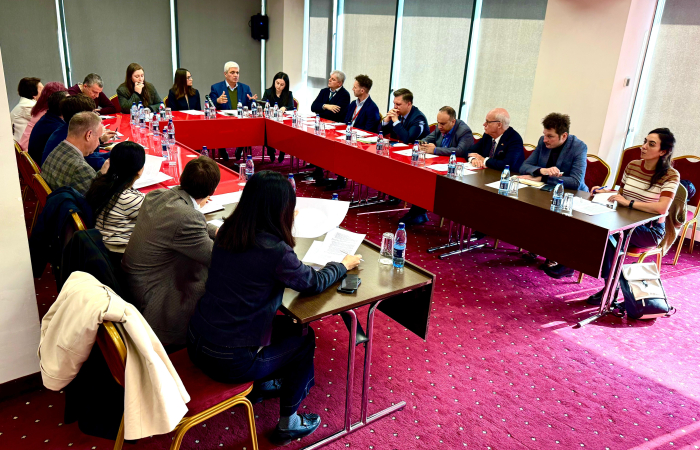
The meeting titled “The residue of conflict: Landmines and other remnants of war in the South Caucasus, and its victims” was held in Yerevan, Armenia, on Monday, 24 November 2025, in the framework of the 2025 regional campaign "Landmine Free South Caucasus" (LFSC25). Addressing the meeting, Mr Stepan Grigoryan, Chairman of the Armenian Analytical Center on Globalisation and Regional Cooperation, emphasized that the problem of landmines is mutual, and it exists in both Armenia and Azerbaijan. He argued that it is important in the peace process to address the humanitarian issues caused by landmines. In addition, he also stressed that it is important for experts to have conversations on the topic of demining, as often it is experts who begin the process that can then be taken further by governments. Stepan Grigoryan said he was happy to be collaborating with LINKS Europe on this important issue, and was glad to associate himself with the LFSC 25 appeal. Anahit Poghosyan, Adviser to the Secretary of the RA Security Council also spoke at the event. Ms Anahit Poghosyan said that the problem of landmines exists in Armenia, and that already around 800 people have been injured or killed due to landmine contamination. The border regions are highly affected, and around 200000 people live in proximity of contaminated areas. She stressed that landmine contamination is an important issue to solve. In addition, she added that Armenia remains committed to humanitarian principles and that experts have been involved in checking the contamination maps to ensure reliability. She ended on an important note that landmines undermine peace and development and pose a grave humanitarian situation in the region. (read more by clicking the image)