Editor's choice
News
Pope on Christmas Day: "Peace is a shared responsibility"

Pope on Christmas Day: "Peace is a shared responsibility"

In his Christmas address on St Peter's Square, Pope Leo XIV renewed his plea for peace, reminding the world that it is both God’s gift and humanity’s shared responsibility. Pope Leo XIV renewed his appeal for peace, dialogue, and responsibility, turning to those regions where violence and instability continue to claim innocent lives. The Pope prayed for “justice, peace, and stability for Lebanon, Palestine, Israel, and Syria,” and urged that the promise of peace rooted in righteousness be renewed. He appealed in a particular way for Ukraine, asking that “the clamor of weapons cease,” and that all those involved, with the support of the international community, find the courage to engage in “sincere, direct, and respectful dialogue.” Remembering conflicts that risk being forgotten, Pope Leo XIV expressed closeness to the victims of war and violence in Sudan, South Sudan, Mali, Burkina Faso, and the Democratic Republic of Congo, as well as to all those who suffer as a result of injustice, political instability, religious persecution, and terrorism. The Pope also prayed for Haiti, calling for an end to violence and progress along the path of peace and reconciliation. He also invoked peace for Myanmar, asking that the country be guided towards reconciliation and hope, especially for its younger generations. Turning to Latin America, he encouraged those with political responsibilities to give space to dialogue for the common good, rather than to ideological and partisan divisions. The Pope also prayed for the restoration of the "ancient friendship" between Thailand and Cambodia, and entrusted to God the peoples of South Asia and Oceania, who have been severely affected by recent natural disasters, calling for renewed commitment to assisting those who suffer.
Editor's choice
Event
Season's Greetings from commonspace.eu

Season's Greetings from commonspace.eu

The Editorial Board and contributors of commonspace.eu extend their best wishes for the festive season to all our readers and subscribers across the world. It has been our pleasure to provide you in 2025 with news, opinions and analysis. As commonspace.eu celebrates its 15th anniversary, we remain committed to continue to be a platform for diverse views and opinions, but always committed to work for peace and justice across the world.
Editor's choice
Monday Commentary
Monday Commentary: 2025 was a momentous year for the South Caucasus

Monday Commentary: 2025 was a momentous year for the South Caucasus

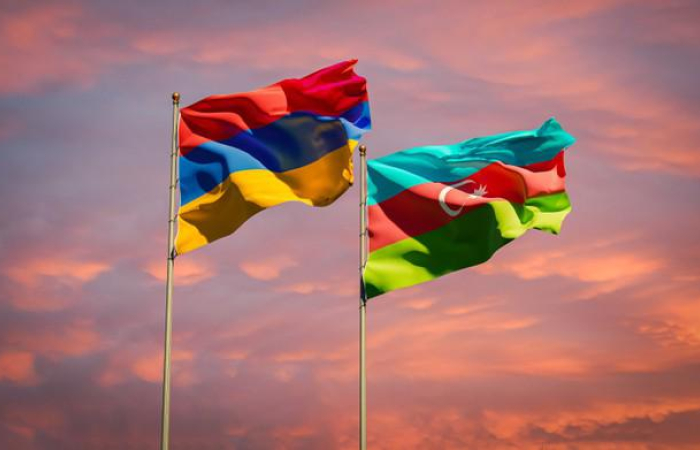
The year 2025 has ended up being a momentous year for the South Caucasus, writes Dennis Sammut in his Monday Commentary. Armenia-Azerbaijan relations have been redefined, with consequences for the whole region and beyond. That huge development overshadowed key moments in the domestic trajectory of the two countries, which however have deep consequences for the two countries, and even beyond. It has also been a tumultuous year for Georgia too. The country has been gripped in a political crisis throughout 2025, with no obvious end in sight. Whatever the domestic arguments, on the international stage Georgia is today a shadow of what it used to be until recently. It not only has lost the chance of joining the European Union any time soon, but it has also lost its position as the leading South Caucasus country. Today, in the new reality of the region, it lags as a tired third. Important as 2025 was, it ended with a lot of unfinished business. So 2026 will also be crucial for the three countries. Since regaining its statehood in 1991 after the dissolution of the Soviet Union, Armenia-Azerbaijan relations have been defined by war. The two fought open wars, wars of attrition, and propaganda wars, incessantly. Tens of thousands of people lost their lives, and hundreds of thousands were displaced. Many had lost hope that the two could try the alternative – i.e. peaceful co-existence. Yet in 2025 they were proven wrong.
Editor's choice
News
Trump still wants Greenland. "We have to have it", he insists.

Trump still wants Greenland. "We have to have it", he insists.

Donald Trump still wants Greenland. "We have to have it", the US president insists. He has sparked a fresh row with Denmark after appointing a special envoy to Greenland.   In response to a question from the BBC about the new role of Jeff Landry, the Republican governor of Louisiana, Trump said the US needed Greenland for "national protection" and that "we have to have it". Trump specifically mentioned Chinese and Russian ships as potential threats in the nearby seas. Greenland, home to about 57,000 people, has had extensive self-government since 1979, though defence and foreign policy remain in Danish hands. While most Greenlanders favour eventual independence from Denmark, opinion polls show overwhelming opposition to becoming part of the US. (click the image to read the full story).

Focus on the South Caucasus

Editor's choice
Opinion
From Baku to Yerevan: A New Chapter for Multitrack Diplomacy

From Baku to Yerevan: A New Chapter for Multitrack Diplomacy

Towards the end of October, a lone Azerbaijani Airlines Gulfstream G650 landed in Yerevan, Armenia. It wasn’t the first to do so in over three decades of conflict but it could well change the future of multitrack diplomacy. Although mutual visits by Azerbaijanis to Armenia and Armenians to Azerbaijan are also not new, before October's flight they always occurred under the auspices of an international organisation or intergovernmental body including countries outside the region. Last month’s visit not only flew direct between the capitals but was bilaterally agreed.

Monday Commentary

Editor's choice
Monday Commentary
 Monday Commentary: Multilateralism is still the only way forward, and the EU can, and should lead

Monday Commentary: Multilateralism is still the only way forward, and the EU can, and should lead

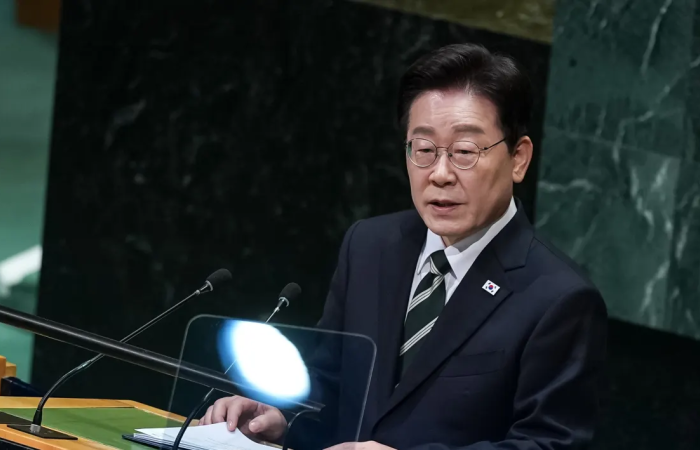
Multilateralism: the concept whereby countries work together on common tasks and challenges, regardless of disagreements, seems currently out of favour. Three developments appear to seal its fate: first, the return of an emboldened Donald Trump to the White House has triggered a new phase of American particularism; second, Russia’s unprovoked invasion of Ukraine in 2022 has created a division in Europe not seen since WWII; third, increased scepticism in the Global South has seen countries or groups of countries adopting a negative view of engagement, particularly with regard to western countries. The European Union (EU) is itself an organisation built on the concept of multilateralism: 27 members states voluntarily join to pool resources and work together. It is a success story, and when someone wants to leave, it can do so as Britain did in 2019. But the EU is a multilateralist player in in own right on the world stage, and it takes this role seriously. The European Council stated that "The European Union will remain a predictable, reliable, and credible partner and welcomes the opportunity to work together in a changing environment with all its partners, as well as with the United Nations and its agencies in driving forward the internal reform process – the UN80 initiative – to ensure that the United Nations remains effective, cost-efficient and responsive.” The commitment is crystal clear. The question is how? It takes two to tango, and the partner of the EU on multilateralism can be China. Unlike the US, China pays lip service to multilateralism, but it actions on Taiwan, the South China Sea, Ukraine, and a lot of other issues, speak a different story. The EU needs to engage China on the multilateral agenda, but needs to do so carefully and selectively. One area were co-operation is necessary and possible is the UN. Donald Trump’s rant at this year’s UN General Assembly is not without justification. The UN needs fixing, but the US proposes to throw out the baby with the bath water. The EU and China can fix this. Reform of the UN is a topic on which the two can work together. They should. On multilateralism the European Union, can and should lead. It must galvanise all its resources, including civil society, a sector where the EU has a lead by far, in the process.
Editor's choice
News
New Armenian-Azerbaijani Dialogue: 42 Armenians and Azerbaijanis set out vision until 2040 in four landmark reports

New Armenian-Azerbaijani Dialogue: 42 Armenians and Azerbaijanis set out vision until 2040 in four landmark reports

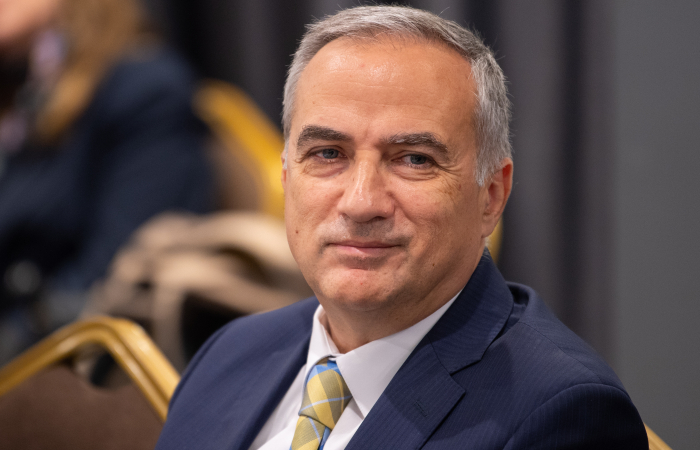
The Thematic Groups for a new Armenian-Azerbaijani Dialogue have produced four reports which set out a vision for relations between Armenia and Azerbaijan, and between Armenians and Azerbaijanis, over the next 15 years. The reports cover four key areas: (1) Peace and Security; (2) Regional Connectivity; (3) Good Governance; and (4) Environment. 42 Armenians and Azerbaijanis were directly involved in preparing the reports as part of the Thematic Groups. Another thirty Armenians and Azerbaijanis contributed to the process. The Thematic Groups were an initiative of LINKS Europe within the framework of EU4Peace 3, a programme supported by the European Union. An ACTION COMMITTEE FOR A NEW ARMENIAN AZERBAIJANI DIALOGUE has now been established, made up of the Chair and Deputy Chairs of the four groups that produced and agreed on the reports. The members of the Action Committee are: Murad Muradov, Leonid Nersisian, Narek Minasyan, Fidan Namazova, Sargis Kharatyunyan, Nigar Gurbanli, Aghavni Kharatyunyan, and Ramazan Samadov.  The first co-chairs of the Action Committee, for the 1st eight month semester are Murad Muradov and Leonid Nersisian. The Action Committee is responsible for the dissemination of the four reports, their eventual updating, and for contributing to the Armenian-Azerbaijani Dialogue and Peace and regional co-operation. LINKS Europe has appointed a Special Advisor to the Action Committee and will provide the Secretariat. The committee will work until December 2027. (click to title to read more or to download the reports)

Focus on Central Asia

Editor's choice
Commentary
Central Asia on the march, but challenges ahead

Central Asia on the march, but challenges ahead

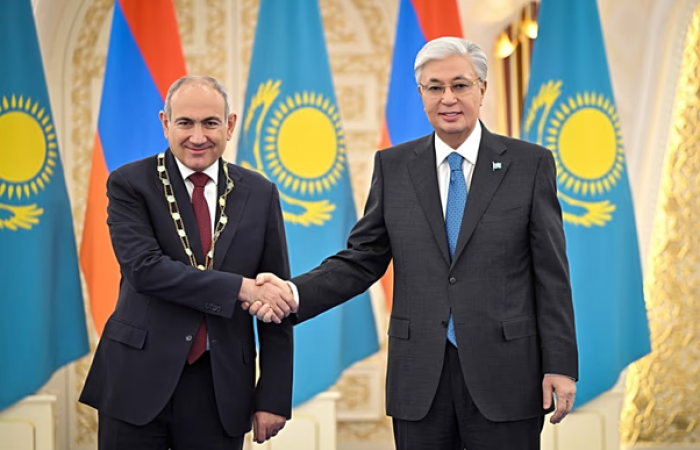
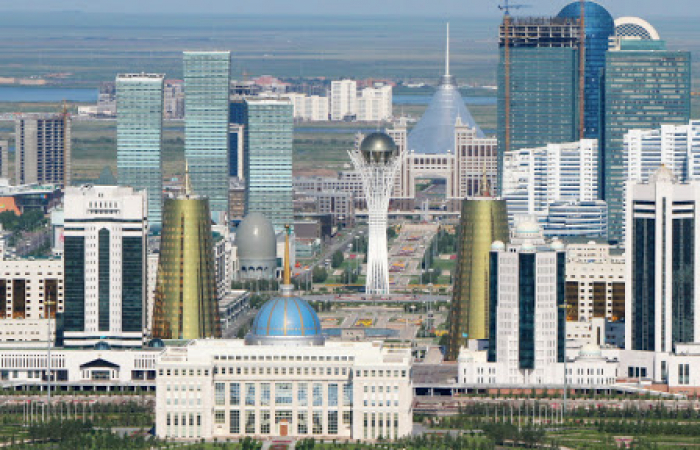
Central Asian leaders have been busy the last month, forging new ties in a changing geopolitical landscape. The presidents of Kazakhstan, Kyrgyzstan, Tajikistan, Turkmenistan, and Uzbekistan travelled to the White House to meet with U.S. President Donald Trump in the C5+1 format. The format, established in 2015, aims to deepen U.S. collaboration with Central Asia, emphasising security and economic cooperation. The U.S. is not the only power looking to maintain its influence in the region. The European Union, Russia, China, and increasingly, India, have all shown their interest in securing economic cooperation and inking energy and trade deals, recognising Central Asia’s strategic position as a key energy and transfer hub situated between East and West. Central Asian states are keenly aware of their leverage and have not only engaged in multi-lateral diplomacy with all of the aforementioned external actors but also adopted a pragmatic regional approach to increase cooperation amongst themselves and taken concrete steps to foster a more unified ‘Central Asian Community’. This was evident by last weekend’s Seventh Consultative Meeting of Heads of State, also known as the C5, where Central Asian leaders officially admitted Azerbaijan as a full member, effectively transforming it into the C6. However, although Central Asia has the unique opportunity to multilaterally engage with all of the world’s biggest economic and security powers, while continuing to shape regional politics and cooperation on its own terms, new security and economic issues are arising that may well reshape Central Asian states’ connections to external actors and potentially strain intra-regional relations. (Read the full commentary by clicking on the picture).
Editor's choice
News
Turkmenistan, Azerbaijan and Uzbekistan hold important trilateral meeting

Turkmenistan, Azerbaijan and Uzbekistan hold important trilateral meeting

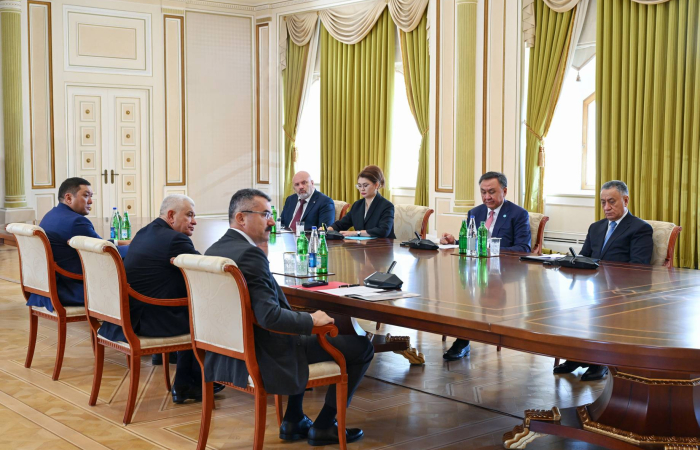
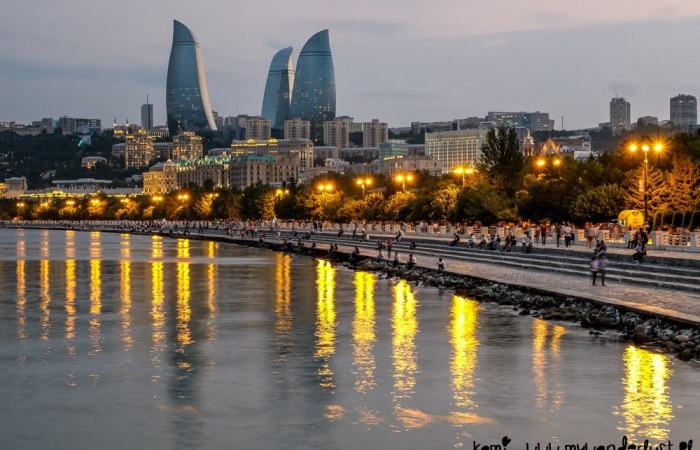
Turkmenistan, Azerbaijan, and Uzbekistan held important trilateral meetings in the Turkmen city of Turkmenbashi on Friday, 22 August. Joint development of deposits on the Caspian shelf and cooperation in the field of energy exports, including renewable sources, were discussed. The talks came in the framework of the visit to Turkmenistan of President Ilham Aliyev of Azerbaijan and President Shovkat Mirzizoyev of  Uzbekistan who were hosted by the Chairman of the Halk Maslahaty (Senate) of Turkmenistan, Gurbanguly Berdimuhamedov, who is a former president and the father of the current president, Serdar Berdimuhamedov. Azerbaijani media noted that during the meeting Uzbekistan hailed a scheme to export green electricity to Europe as promising, while Turkmen officials signaled a new openness to ideas long discussed in Brussels and Ankara, to build a Trans-Caspian gas pipeline, a project that has been under discussion for more than 30 years.

Focus on NGOs

Editor's choice
News
LINKS Europe holds expert conference in The Hague on political transition in the South Caucasus

LINKS Europe holds expert conference in The Hague on political transition in the South Caucasus

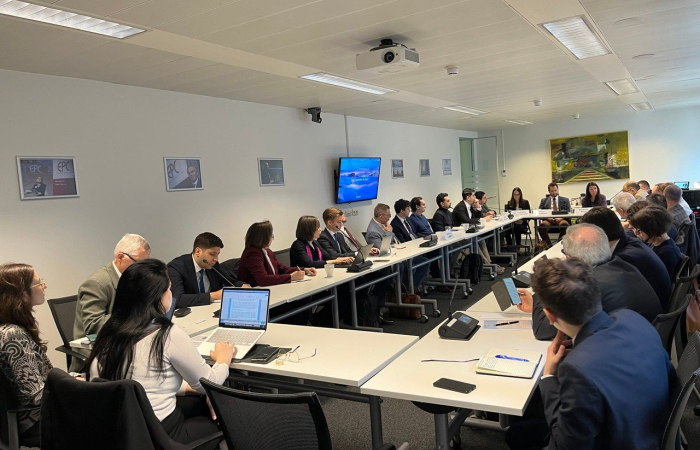
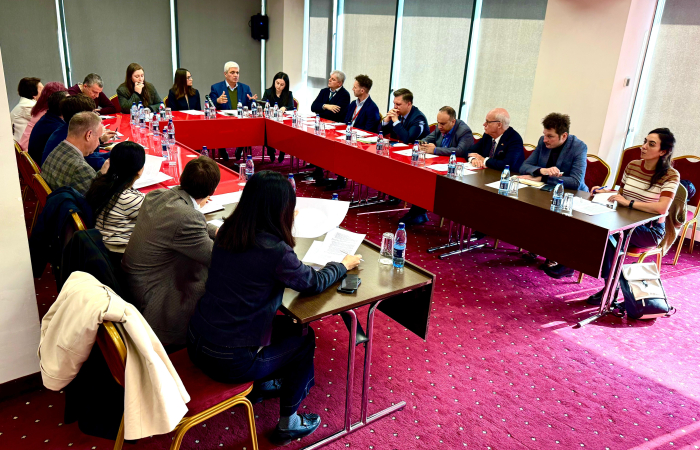
A conference organised in The Hague by LINKS Europe Foundation brought together experts and activists from the South Caucasus, the European Union and beyond to discuss the current state of political transition in the region. The gathering gave particular attention to the European Union's evolving role in the region amidst rapidly changing domestic and regional dynamics as well as Türkiye's influence as a regional power.
LINKS Europe

commonspace.eu is an activity of LINKS Europe, an independent foundation based in The Hague, The Netherlands. We focus on issues related to European peace and security, Europe's neighbouring regions, including Eastern Europe, the Caucasus and Central Asia; North Africa and the Sahel, the Horn of Africa and the Arabian Peninsula. LINKS Europe is committed to contributing to a better future by increasing understanding of complex foreign policy issues, by promoting dialogue and confidence-building as tools for helping to resolve conflict, and by engaging citizens in the process of building peace and security on the basis of solidarity and mutual respect. Through commonspace.eu, we aim to provide insights and analysis on different topics in our area of interest and a platform for diverse opinions.

Read LINKS Europe's work programme for the two-year period 2024-2025 here