Editor's choice
GULF CRISIS
US attacks Iran again, and Iran retaliates with attacks on targets across the Gulf

US attacks Iran again, and Iran retaliates with attacks on targets across the Gulf

Iran has declared the Straits of Hormuz closed,and fired at a Cypriot-flagged tanker trying to cross. This triggered a US attack on Iran. In response Iran fired missiles and drones at US targets across the Gulf. Iran's Islamic Revolutionary Guard Corps (IRGC) said it closed the waterway until further notice and warned of a severe response to US "aggression", according to state media. Within hours of the US strikes, the IRGC said they had hit a US base in Jordan, while the United Arab Emirates, Qatar, Kuwait and Bahrain were all responding to missiles and drones from Iran. It comes after incidents earlier this week in which three commercial tankers were attacked, prompting an exchange of strikes with the US. US Central Command (Centcom) said it launched a third round of strikes this week after the IRGC "blatantly attacked" a Cyprus-flagged vessel in the Strait of Hormuz. Centcom said the MV GFS Galaxy was "unable to continue its journey" as a result of significant damage to the engine room. One civilian crew member was missing, it said. It said US strikes hit 140 Iranian military targets, including missile and drone sites, communication networks, and coastal surveillance locations. The UK's Maritime Trade Operations (UKMTO) said it had been informed by military authorities that the crew of the vessel were forced to abandon ship and were in a lifeboat.
Editor's choice
GULF CRISIS
Trump says ceasefire with Iran is "over", but the two sides will still meet in Oman on Saturday

Trump says ceasefire with Iran is "over", but the two sides will still meet in Oman on Saturday

US president Donald Trump has said that the ceasefire with Iran is "over". But the two sides are still expected to meet on Saturday (11 July) in Oman. According to reports Vice-President JD Vance, Secretary of State Marco Rubio and two people who have been heavily involved in Middle East talks - special envoy Steve Witkoff and Trump's son-in-law Jared Kushner -  will be in Saturday's negotiations. The US wants Iran to publicly state that the Strait of Hormuz is open and to pledge to stop firing on commercial ships as part of negotiations due to be held in Oman on Saturday. US media cited unnamed officials as saying Tehran had privately acknowledged to President Donald Trump's advisers that the shooting at ships was a mistake, though the Iranians reportedly pinned the blame on a rogue internal group. Trump has said both sides have agreed to continue talks despite this week's fighting over the Strait of Hormuz, which the White House saw as a violation of the ceasefire. Iranian Foreign Minister Abbas Araqchi said his country had "kept its word" on the ceasefire, saying on X the US had violated the deal. In June the US and Iran signed a ceasefire agreement where Iran would, in part, give safe passage to commercial ships. Tehran said that an "errant" sect of hardliners was trying to undermine negotiations by firing on the commercial ships, senior US officials told CBS News, the BBC's US partner. One official told the TV network: "They [the Iranians] came back to the table and said, 'We screwed up. We made a mistake. Let's keep talking.'" In a briefing for reporters on Friday, the US officials said a message to Tehran's leadership had been conveyed through regional mediators demanding Iran release a statement declaring the strait open and that it will stop shooting at commercial ships, according to multiple media reports. "They're either going to give us that statement or we're not having a good outcome for them," said one official, quoted by Reuters news agency. Meanwhile, a delegation from Qatar travelled to Iran on Friday for talks aimed at defusing tensions and easing navigation through the Strait of Hormuz. Trump wrote in a post on Truth Social earlier on Friday: "The Islamic Republic of Iran has asked us to continue 'talks.' "We have agreed to do so, but the United States has stated to them, in no uncertain terms, that the Cease Fire is OVER!"
Editor's choice
GULF CRISIS
Mediators try to salvage US-Iran agreement

Mediators try to salvage US-Iran agreement

Mediators from Pakistan and Qatar have been desperately trying to salvage the US-Iran agreement, outlined in a Memorandum of Understanding, that over the last few days looked increasingly as if it was falling apart. After Iran tried to assert its control over the Strait of Hormuz, firing at ships that had ignored its claims, the US bombed targets in Iran. Iran subsequentlky bombed US military facilities in Bahrain, Kuwait, Qatar and Jordan. But the last twelve hours have been quieter, and observers believe that the mediators - Pakistan and Qatar have persuaded the two beligerents to stop shooting and return to diplomacy. Fighting immediately impact the precarious oil market. It was announced that the US Strategic Petroleum Reserve has hit its lowest level since 1983, due to growing tensions with Iran and global supply concerns. President Trump acknowledged to reporters on Wednesday that any time the US strikes Iran, oil prices jump. And they did. The reserve fell by 6.2 million barrels in the week ending July 3 to 319.5 million barrels – its lowest level since the Reagan administration. In the Gulf, there is increasing concern on the fragility of the US-Iran agreement.Zeidon Alkinani, founding director of the Arab Perspectives Institute, says Gulf states are conducting efforts to ensure diplomacy ends the US war on Iran as soon as possible. “In the long term, we might be seeing different schools of thought and imagining a future relationship with Iran, a future relationship with the US, or imagining new transnational alliances from the regional perspective,” Alkinani told Al Jazeera. Considerations would include how to achieve more deterrence for Iranian and Israeli expansionism, and how to curb too much reliance on the United States, he added. “Others might want to continue things as they were to ensure that the conflicts were to end,” said Alkinani.
Editor's choice
GULF CRISIS
US and Iran exchange attacks despite cease-fire

US and Iran exchange attacks despite cease-fire

The fragile cease fire between the United States and Iran continued being tested last night, The US said it had hit 90 targets in Iran, and Iranian media reported that explosions were heard in areas along the country's southern coast. Bahrain, Kuwait and Qatar have subsequently reported Iranian attacks - Iran said it had targeted US bases in the three countries. Meanwhile, ships hoping to sail through the Strait of Hormuz face a confusing picture, with both sides seeking to push traffic through different routes. Vessels have been advised to avoid going through the middle of the Strait of Hormuz due to the ongoing conflict. The Joint Maritime Information Center (JMIC) - which the US is a member of - has recommended vessels take a route close to the coast of Oman at the south of the strait, in order to avoid the risk of Iranian mines. But Iran says no vessel is permitted to pass through the strait unless it travels along a designated route further north, closer to its coastline. Its Persian Gulf Strait Authority will only issue permits if that route is taken, with others "strictly prohibited". These competing attempts to manage how the strait operates have added to the fraught situation facing shipping companies in the vitally important shipping lane. The Iranian foreign ministry has accused the US of a "flagrant breach" of parts of the memorandum of understanding (MoU) signed on 17 June, which brought about a temporary truce. That called for an "immediate and permanent termination of military operations", and said Iran would "make arrangements using its best efforts for the safe passage of commercial vessels" through the Strait of Hormuz. How both sides interpret that part of the MoU has become a key point of tensions in this conflict. The foreign ministry says the US carried out attacks under the "false pretext" of responding to "alleged incidents involving several non-compliant vessels" in the strait. The US previously accused Iran of a "clear violation of the ceasefire" for targeting three commercial ships in the strait. Iran has not claimed responsibility for those attacks. The foreign ministry also condemns "crude rhetoric" from Donald Trump, who on Wednesday called Iran's leadership "scum" and "cuckoo". It accuses the US of a "grave war crime" for targeting of several locations, including two railway bridges.

Focus on the South Caucasus

Editor's choice
Live blog
ARMENIAN ELECTIONS - webinar and live blog

ARMENIAN ELECTIONS - webinar and live blog

Monday, 8 June 2026 =================================================== AND THEN THERE WERE THREE Revised figures from the Armenian CEC has shown that the Prosperous Armenia party, has fallen short of the 4% threshold, and will therefore not be in the new Parliament. According to newly updates, Prosperous Armenia got 3.996 percent and is not passing the threshold. Thus Civil Contract will have 64 MPs, Strong Armenia alliance 29 MPs, and Armenia alliance 12 MPs FOUR PARTIES PASS THE THRESHOLD AND WILL BE REPRESENTED IN ARMENIAN  PARLIAMENT The Armenian Central Elections Commission has completed the counting of ballots for the parliamentary elections. The results of all 2005 polling stations have been calculated. The votes were distributed as follows: In the lead is the Civil Contract party, which received 727,160 votes or 49.81 percent. In second place is the "Strong Armenia" alliance of parties, which received exactly 23.29% (340,062 votes). The third place is occupied by the "Armenia" alliance of parties, which has 9.94% (145,097 votes). The Prosperous Armenia Party is in fourth place, garnering 4.00% (58,368 votes). The "Wings of Unity" party, which occupies fifth place, currently has 2.30% (33,618 votes). Accordingly, the minimum threshold is overcome by 4 political forces: the "Civil Agreement", the "Strong Armenia" alliance, the "Armenia" alliance, and the Prosperous Armenia Party. =================================================== Nikol Pashinyan, and his Civil Contract Party, have won the parliamentary elections held in Armenia on 7 June. Preliminary results from the Armenian Central Elections Commission show Civic Contract with 50.83% of the votes. As of now, (0500 am local time) the results of 1,354 polling stations have been summarized, with 864,643 voters. The votes so far are as follows: "Reformist Party" - 847 votes, 0.1 percent "I am against everyone" Democratic Party - 11,382 votes, 1.33 percent "Strong Armenia" alliance – 201,006 votes, 23.51 percent "Shonorable Party of Armenia" – 15,986 votes, 1.87 percent "New Force" reformist party – 13,109 votes, 1.53 percent "Wings of Unity" Party – 19,270 votes, 2.25 percent Prosperous Armenia Party – 35,074 votes, 4.10 percent "National Democratic Pole" Pan-Armenian Party – 2,997 votes, 0.35 percent "Kocharian National Revival and National Awakening Party" – 1,093 votes, 0.13 percent "Armenian National Congress" party – 1,759 votes, 0.21 percent "Republic" Party – 8 thousand 666 votes, 1.01 percent "Christian Democratic Party" – 1,484 votes, 0.17 percent Democratic Unity Party – 2,951 votes, 0.35 percent "Democracy, Law, Discipline" Party – 15,483 votes, 1.81 percent "Civil Contract" Party – 434,562 votes, 50.83 percent "Armenia" bloc – 80 thousand 937 votes, 9.47 percent "Alliance for the Defense of Democracy for the Republic" party – 3,973 votes, 0.46 percent "Bright Armenia" Party – 4,060 votes, 0.47 percent. =================================================== To read the blog, click the image above

Monday Commentary and Thursday Interview

Editor's choice
Interview
Thursday Interview: Stephen Gethins MSP

Thursday Interview: Stephen Gethins MSP

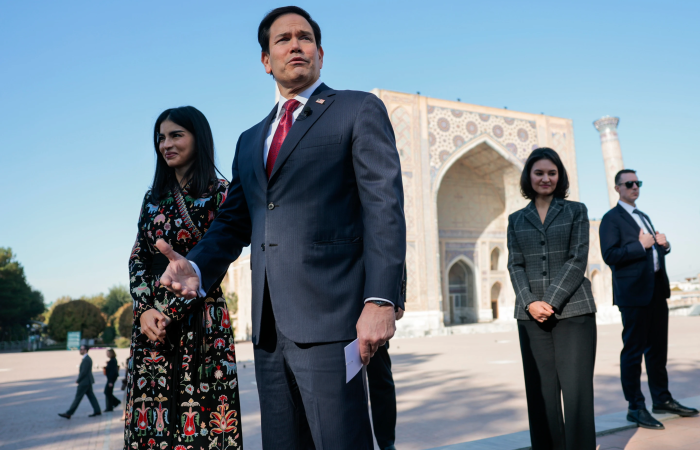
Stephen Gethins was elected as Member of the Scottish Parliament for Dundee City East in the 2026 election, after previously serving as Westminster MP for North East Fife and, later until this month, for Arbroath and Broughty Ferry. He has also worked extensively in international affairs, including on peace-building, arms control and democratisation in the South Caucasus and the Balkans, and was appointed Professor of Practice in International Relations at the University of St Andrews in 2019. Following the Scottish Parliament election on 7 May 2026, commonspace.eu spoke to the newly elected Scottish National Party MSP (Member of the Scottish Parliament) about Scotland’s relationship with Europe, the security implications of Brexit, and the challenges facing democratic societies at a time of war, disinformation, and geopolitical instability. (To read the full interview, click on the image above.)

Focus on Central Asia

Focus on Arabia

Editor's choice
Monday Commentary
Monday Commentary:  Where does 100 days of war in the Middle East leave everyone?

Monday Commentary: Where does 100 days of war in the Middle East leave everyone?

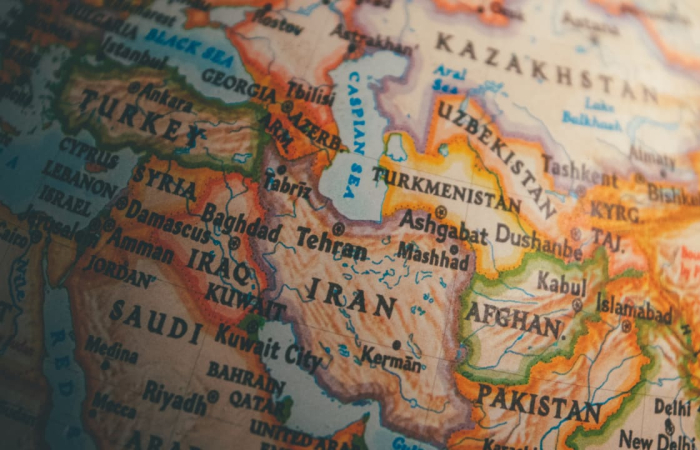
The war against Iran, unleashed by the United States and Israel started 100 days ago, on 28 February 2026. Two days later, in my Monday Commentary on commonspace.eu, I said that Donald Trump had opened Pandora’s Box, and that the conflict unleashed will have deep and lasting consequences for the region, and for the world. Unfortunately, it seems I was right. We are just at the beginning of what are likely to be, a chain of events, that remain for the most part unpredictable, even if the dangers, turmoil and risks, can already be seen. The problem is far from being resolved. A sort of a ceasefire has decreased the violence in the Gulf. Trump, under pressure from many quarters, to bring the crisis to a halt, keeps promising a deal “soon”, but in this, as with everything else in this saga, Trump is far away from reality. The revolutionary regime in Iran did not melt away; the killing of the Supreme Leader did not end the regime, nor did it mellow it down, the Iranian people did not rise to overthrow the clerics and their system, and the world did not rally around the US to support its adventure. Instead, Trump found himself tied to Israel’s Benyamin Netanyahu, and his convoluted view of the Middle East. Traffic through the vital global trade artery – the Strait of Hormuz, has been disrupted, as have global energy supplies, and other vital goods, such as fertilizer. Even if a semblance of peace is restored, the impact will be widespread and everlasting. This is seen, and will be seen even more crudely in the future, in the six Gulf monarchies that constitute the Gulf Co-operation Council (GCC). The six countries have since the late 1960s relied on the US for their defence and security. They had blind faith in the US, and this seemed to increase when Donald Trump returned to the White House for a second term. They did not want the war. It came as an unpleasant surprise. But once it started, they expected the Americans to win it quickly and decisively. Instead, they find themselves faced with an injured but emboldened Iran, and a new Gulf reality that is unpleasant and uncomfortable. The GCC countries have to go back to the drawing board. At least three of them, Saudi Arabia, Qatar, and UAE, have the financial clout necessary, and leaders that are sharp enough to deliver. But there are some realities that will be inevitable. Iran, a hundred days after the killing of the Supreme Leader, is injured but emboldened. The heavy bombardments by the most powerful planes and missiles of the US and Israel, killed thousands of people, including one tier of leaders. But the worst damage is the material damage to infrastructure and facilities that will take years to restore. So far, the Islamic Republic, and its institutions have remained intact. But that does not mean they are not under pressure. Beyond the bravado speech coming out of Tehran, there is another reality. The war might not have triggered the revolt that Netanyahu and Trump expected, but it has triggered a process of change, the full implications of which will only be seen once the dust has settled. Donald Trump emerges from the last hundred days weakened and vulnerable. The outcome of the war is not what he expected. It was his war, even if some say that it was Netanyahu’s war. He thought he could win it quickly and decisively. He didn’t. Americans, to the right and to the left, are unhappy with the war and its consequences. They will have their say in the mid-term elections later this year. It is too early for the opponents of Trump to claim victory. But the writing is on the wall. The war will define Trump’s second term. For the moment it does not look good for the president. It does not look good for the United Sates either. Despite the impressive display of US shooting power, the war exposed the limits of US power, and the increasing US isolation in the world. The US can flatten a country, but it cannot flatten a people. The US deployed everything it has against Iran, except nuclear weapons. It dented the Iranian regime and its capabilities. Maybe even more. But it did not obliterate it. That clearly came as a surprise to Donald Trump; to US allies in the Gulf it came as a shock; to US adversaries in the world, who were watching carefully, it was a very instructive moment, and they all drew their own conclusions. The last hundred days have had an impact on others too: Israel; Lebanon, and the Palestinians, are caught in it. Europe is trying desperately not to be embroiled in Trump’s war. But Europe must be prepared for the day after. There is little sign of that yet. ======== (Click the image to read the Monday Commentary in full)
Editor's choice
Analysis
Briefing: In the Gulf, the British “peace” ended sixty years ago, but the Saudi “peace” has not yet replaced it

Briefing: In the Gulf, the British “peace” ended sixty years ago, but the Saudi “peace” has not yet replaced it

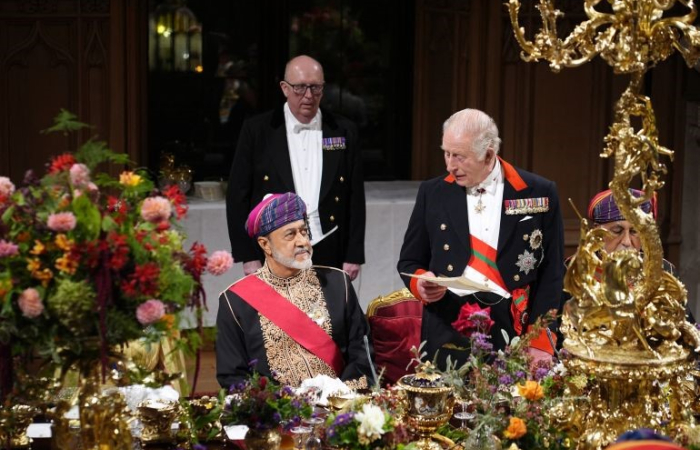
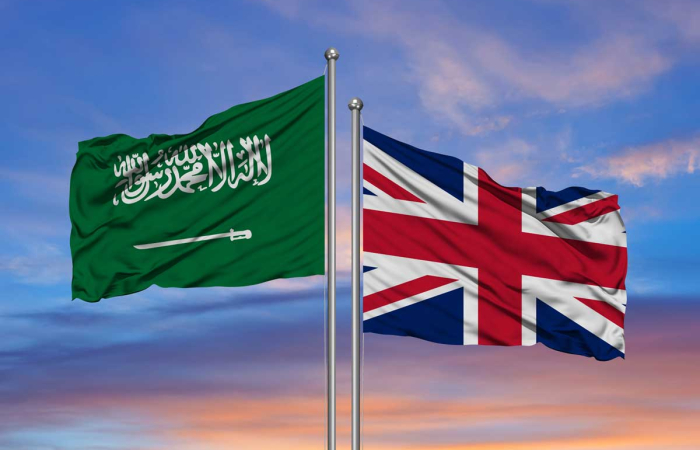
Relations between the Kingdom of Saudi Arabia and the United Arab Emirates have in the last decade, been competitive. Led by two ambitious but visionary men – both named Mohammed: MBS – Mohammed bin Salman, the Crown Prince of Saudi Arabia; and MBZ – Mohammed bin Zayed, the Ruler of Abu Dhabi and president of the Emirates, the two Gulf neighbours embraced many aspects of modernity, and moved hurriedly to turn their countries into global vanguards", writes Dennis Sammut, in this Briefing for Arabia Concise. "Yet up to now, competition was kept within bounds. They cooperated closely in areas of security and presented a united front. They were on the same side when they confronted Qatar and in their opposition to the Houthis' takeover of Yemen. Yet problems had been brewing under the surface for a while, and in the last month they burst into the open." The relations between Saudi Arabia and the United Arab Emirates (UAE) have been increasingly strained as a result of the different approaches of the two countries towards Yemen. The problems between Saudi Arabia and the Emirates are not new. The Kingdom was never happy with the existence of the smaller states on the Arabian peninsula, which, for most of the 20th century, had British “protection”. But the wisdom of MBZ’s father, Sheikh Zayed, the founder of the UAE, and the caution of MBS's uncles, who ruled Saudi Arabia, generally managed the problems outside the public eye. When the British peace ended abruptly in the 1960’s – the British ran out of money – many thought that the Saudi peace would replace it. Sixty years later, it still has not. not only in monetary terms, but also diplomatically. Saudi “Peace” may be tempting, but it comes at a price. The UAE remains vulnerable because of its size, demography and geography; Its wealth may protect it for a while, but it has its limits. The decision of the UAE to break ranks and recognise Israel may have endeared it to the United States. But many inside, as much as outside the country, are not convinced. (You can read the full Briefing by clicking the image above)
LINKS Europe

commonspace.eu is an activity of LINKS Europe Foundation, an independent foundation based in The Hague, The Netherlands. We focus on issues related to European peace and security, Europe's neighbouring regions, including Eastern Europe, the Caucasus and Central Asia; North Africa and the Sahel, the Horn of Africa and the Arabian Peninsula. LINKS Europe is committed to contributing to a better future by increasing understanding of complex foreign policy issues, by promoting dialogue and confidence-building as tools for helping to resolve conflict, and by engaging citizens in the process of building peace and security on the basis of solidarity and mutual respect. Through commonspace.eu, we aim to provide insights and analysis on different topics in our area of interest and a platform for diverse opinions.

Read LINKS Europe's 2025 Annual Review here.

Editor's choice
News
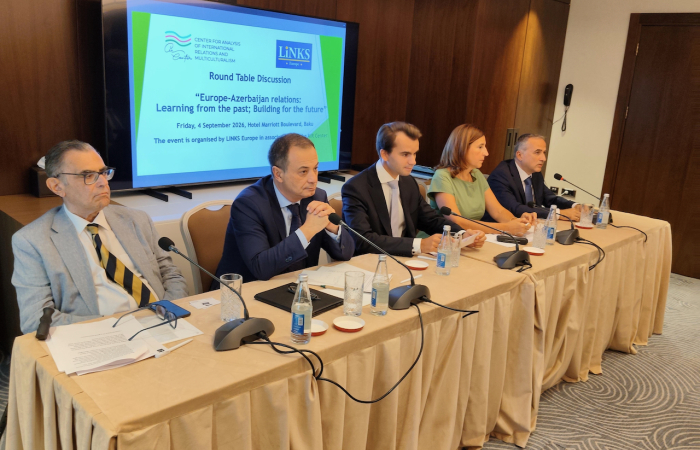
New Armenian-Azerbaijani Dialogue: 42 Armenians and Azerbaijanis set out vision until 2040 in four landmark reports

New Armenian-Azerbaijani Dialogue: 42 Armenians and Azerbaijanis set out vision until 2040 in four landmark reports

The Thematic Groups for a new Armenian-Azerbaijani Dialogue have produced four reports which set out a vision for relations between Armenia and Azerbaijan, and between Armenians and Azerbaijanis, over the next 15 years. The reports cover four key areas: (1) Peace and Security; (2) Regional Connectivity; (3) Good Governance; and (4) Environment. 42 Armenians and Azerbaijanis were directly involved in preparing the reports as part of the Thematic Groups. Another thirty Armenians and Azerbaijanis contributed to the process. The Thematic Groups were an initiative of LINKS Europe within the framework of EU4Peace 3, a programme supported by the European Union. An ACTION COMMITTEE FOR A NEW ARMENIAN AZERBAIJANI DIALOGUE has now been established, made up of the Chair and Deputy Chairs of the four groups that produced and agreed on the reports. The members of the Action Committee are: Murad Muradov, Leonid Nersisian, Narek Minasyan, Fidan Namazova, Sargis Kharatyunyan, Nigar Gurbanli, Aghavni Kharatyunyan, and Ramazan Samadov.  The first co-chairs of the Action Committee, for the 1st eight month semester are Murad Muradov and Leonid Nersisian. The Action Committee is responsible for the dissemination of the four reports, their eventual updating, and for contributing to the Armenian-Azerbaijani Dialogue and Peace and regional co-operation. LINKS Europe has appointed a Special Advisor to the Action Committee and will provide the Secretariat. The committee will work until December 2027. (click to title to read more or to download the reports)
Editor's choice
Event
LFSC25: Yerevan meeting focuses on issues of landmines and remnants of war in Armenia and the South Caucasus

LFSC25: Yerevan meeting focuses on issues of landmines and remnants of war in Armenia and the South Caucasus

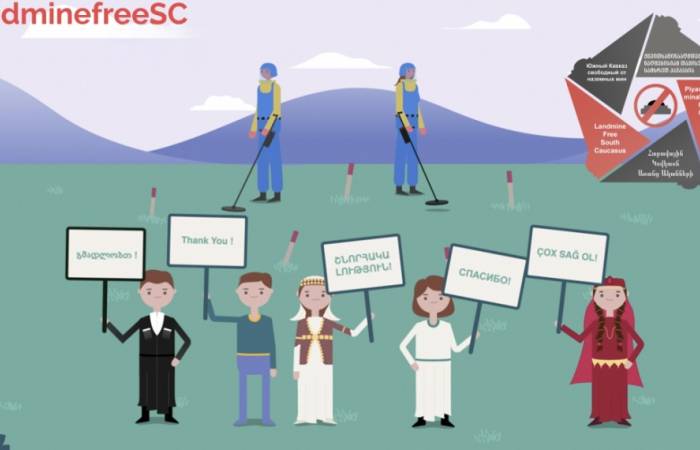
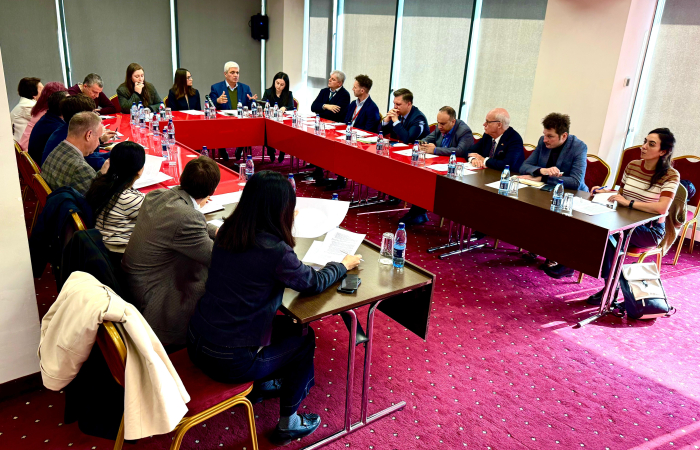
The meeting titled “The residue of conflict: Landmines and other remnants of war in the South Caucasus, and its victims” was held in Yerevan, Armenia, on Monday, 24 November 2025, in the framework of the 2025 regional campaign "Landmine Free South Caucasus" (LFSC25). Addressing the meeting, Mr Stepan Grigoryan, Chairman of the Armenian Analytical Center on Globalisation and Regional Cooperation, emphasized that the problem of landmines is mutual, and it exists in both Armenia and Azerbaijan. He argued that it is important in the peace process to address the humanitarian issues caused by landmines. In addition, he also stressed that it is important for experts to have conversations on the topic of demining, as often it is experts who begin the process that can then be taken further by governments. Stepan Grigoryan said he was happy to be collaborating with LINKS Europe on this important issue, and was glad to associate himself with the LFSC 25 appeal. Anahit Poghosyan, Adviser to the Secretary of the RA Security Council also spoke at the event. Ms Anahit Poghosyan said that the problem of landmines exists in Armenia, and that already around 800 people have been injured or killed due to landmine contamination. The border regions are highly affected, and around 200000 people live in proximity of contaminated areas. She stressed that landmine contamination is an important issue to solve. In addition, she added that Armenia remains committed to humanitarian principles and that experts have been involved in checking the contamination maps to ensure reliability. She ended on an important note that landmines undermine peace and development and pose a grave humanitarian situation in the region. (read more by clicking the image)