Editor's choice
Opinion
Opinion: After the visit of US Vice President JD Vance, the South Caucasus is being rewired

Opinion: After the visit of US Vice President JD Vance, the South Caucasus is being rewired

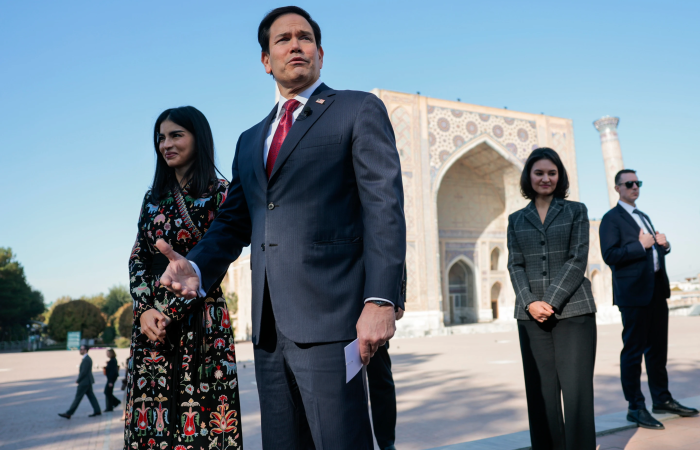
"Vance’s visit did more than consolidate a peace process – it began rewiring the South Caucasus through energy, AI, and infrastructure. The region’s future alignment may well be determined less by traditional security blocs and more by who controls the region’s transport routes, builds its reactors, powers its data centers, and lays its fiber-optic cables", writes Vasif Husseynov, in this op-ed for commonspace.eu Vance’s February 9–11 visit to Armenia and Azerbaijan marked a structural turning point in the South Caucasus. Unlike previous high-level engagements of the United States that generated rhetorical alignment but limited follow-through, this visit embedded the region into long-term American economic, technological, and strategic frameworks. Taking place on the heels of the latest agreement (January 14) between Washington and Yerevan on the implementation framework for the Trump Route for International Peace and Prosperity (TRIPP), the visit served to consolidate the American influence in the region and taking it to higher levels. The consequences are unfolding along two axes: domestically, within Armenia and Azerbaijan’s political economies; and geopolitically, in the region’s recalibrating balance between the United States and Russia, with Georgia seeking entry into the new configuration. (click the image to read the op-ed in full).
Editor's choice
Monday Commentary
Monday Commentary: Armenians and Azerbaijanis are carving a new South Caucasus

Monday Commentary: Armenians and Azerbaijanis are carving a new South Caucasus

For many years, the international community was telling the governments of Armenia and Azerbaijan to prepare their populations for peace. Instead, they prepared them for war, which eventually came in 2020, followed by a period of uncertainty. In the last year the two sides turned the page. In March 2025 they agreed the elements of a peace agreement. On 8 August, at a historic meeting in the White House, this agreement was initialed. Since then, the two sides have taken huge, unprecedented steps to achieve peace and reconciliation. On 13 February, twenty Azerbaijani civil society experts walked across the border with Armenia, presented their passports at an Armenian border checkpoint and entered Armenia, to be welcomed by 20 Armenian counterparts, with who they spent the next two days discussing future regional peace and co-operation. The symbolism and importance of this event is huge. Even if you accept that this was a tightly choreographed affair, managed by the two governments, its importance is unquestionable. There will now be a “return” event. The 20 Armenians involved in the process will go to Azerbaijan. The arrival of the large Azerbaijani group in Armenia was in the framework of the “Peace Bridge”, which started taking shape in October of last year. This has two characteristics, which make it special, relevant and ground breaking. The first is that the initiative not only has government backing, but has two important “patrons” – presidential adviser in Azerbaijan, Hikmet Haciyev; and Armenian National Security Council Secretary, Armen Grigoryan. These two men did most of the heavy lifting behind the scenes to get the peace process on the right track. So there is a bit of a haze between track 1 and track 2, but in this case it is all for the better. The second important element, is that this is an all-local initiative. There is no foreign funding; no external NGO, or any other outside involvement. This is hugely significant and important. One also needs to commend the transparency of the process. The names of those participating on both sides were published.There is no conflict anymore between Armenia and Azerbaijan. Armenians and Azerbaijanis, at official level, and at civil society level, are talking directly to each other without intermediaries. This is something to be celebrated. That part of our work is done, and we should be happy and satisfied. We contributed as much as anyone so that the sides could reach this point. Now its time to move on. (click image to read the full Monday Commentary)
Editor's choice
Interview
Thursday Interview: Johnny Melikyan

Thursday Interview: Johnny Melikyan

Johnny Melikyan is a Yerevan-based political analyst and foreign policy specialist. As a head of department at the Public Relations and Information Center (The Office of the Prime Minister of Armenia) and senior fellow at the Orbeli Center, he has spent more than 15 years studying Georgia and regional dynamics, and today focuses on how diplomacy, connectivity, and economic cooperation can shape stability in the South Caucasus. Speaking to commonspace.eu this week, Melikyan reflected on what he calls a “half-diplomatic” profession, discussed regional developments, including Armenia-Georgia relations, and argued why small states increasingly rely on multi-vector foreign policy strategies to manage external pressures. “For small states, foreign policy is about smart power: being flexible, innovative, and balancing the interests of bigger powers with your own”. (Read the full interview by clicking the image above)

Focus on the South Caucasus

Monday Commentary and Thursday Interview

Editor's choice
Monday Commentary
Monday Commentary: The European Political Community has the potential to respond to Europe’s changing needs in defence and security

Monday Commentary: The European Political Community has the potential to respond to Europe’s changing needs in defence and security

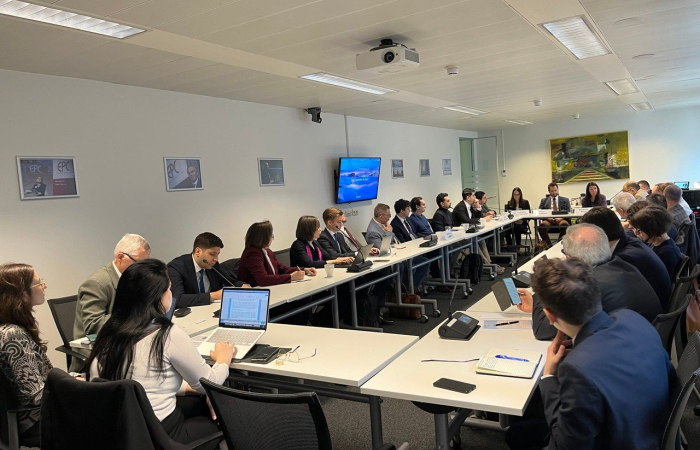
They say that a week is a long time in politics, and the time since the European Political Community (EPC) was established in October 2022, may now seem like an eternity. The war in Ukraine, that triggered the establishment of the EPC, drags on, and continues to define Europe. Everything else has changed. When the EPC was established, many yawned, and saw it as yet another useless talking shop. But the idea of creating a framework that brings the 27 EU member states with other European countries – 20 at the last meeting – has increasing value. The attendance of the leaders of these 20 countries: Turkiye’s Erdogan, Ukraine’s Zelensky, UK’s Starmer, and others, has made its twice yearly meetings an important occasion. It is in one area: defence and security, where the biggest need of Europe currently is, and where the biggest potential of the EPC lays. The war in Ukraine, Russia’s malign intentions, and Trump’s reset of US foreign and security policy, focused minds. Europe had been sleeping! When it woke up it did what the EU does whenever it is faced with a problem, it threw money at it, and started a defence spending spree, that was overdue, but is not by itself enough. The EU27 may be a global economic force, but on their own they lack strategic clout. But if you add with them the other European countries such as Turkiye, UK, Ukraine, and even smaller ones such as Norway and Switzerland, it becomes a completely different preposition. Under the surface, these discussions are going on even more intensively. But the European Political Community offers a space for conversations – public and private between the leaders of wider Europe. The value of the Community is therefore significant. The next EPC summit will be in Armenia on 4 May 2026. It will be important for a number of reasons: It will be a summit that should contribute to Armenia-Azerbaijan peace; it is not clear at what level will Azerbaijan participate, but for sure this will be a high level delegation. It will be the first EPC summit in Russia’s back yard – Armenia is still a member of the EAEU, and even if only on paper, of CSTO. The summit will take place on the eve of crucial parliamentary elections in Armenia that will determine the fate of the country and the region. But in the background will be the issue of how wider Europe can work together on defence and security. This will take time – probably not less than a decade – but the work has started, and the EPC summit in Armenia will contribute to it. (click the image above to read the full Monday Commentary).
Editor's choice
Interview
Thursday Interview: Dr. Sarah Njeri

Thursday Interview: Dr. Sarah Njeri

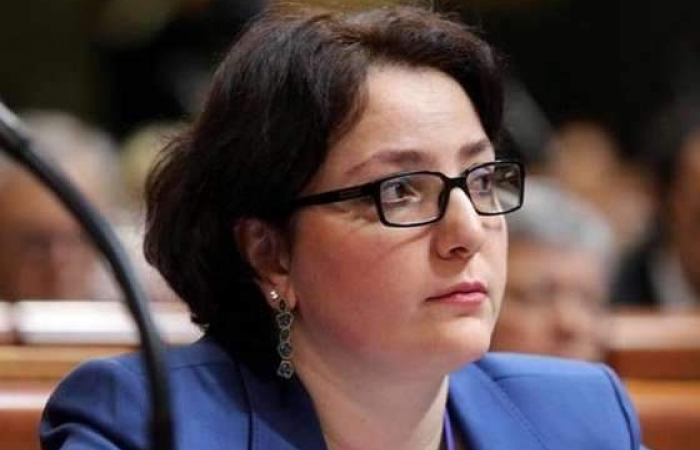
Dr. Njeri is a peace and conflict scholar and mine action activist whose work sits at the intersection of humanitarian practice, critical theory, and policy reform. In closing off a successful first month of commonspace.eu’s Thursday Interview series, she reflects on how lived experience in humanitarian action has shaped her scholarship, how hierarchies within knowledge production shape peace-building practice, and what mine action, the work of clearing landmines and other Explosive Remnants of War (ERW), reveals about power and politics on the ground. Dr. Njeri was instrumental in the success of LINKS Europe’s Bonn Contact Group on Climate, Peace and Security, where she co-authored a report on the nexus between climate change and land contamination and degradation resulting from the remnants of armed conflict. Read “Land degradation: The ‘double exposure’ of ERW contamination and climate change” by Dr. Sarah Njeri and Dr. Christina Greene. “Across contexts like Somaliland, Iraq, Ukraine, and the South Caucasus, the core barriers to translating evidence into mine action policy are less about ‘missing data’ and more about politics, incentives, and entrenched governance structures”. (Read the full interview by clicking the image above)
Editor's choice
News
New Armenian-Azerbaijani Dialogue: 42 Armenians and Azerbaijanis set out vision until 2040 in four landmark reports

New Armenian-Azerbaijani Dialogue: 42 Armenians and Azerbaijanis set out vision until 2040 in four landmark reports

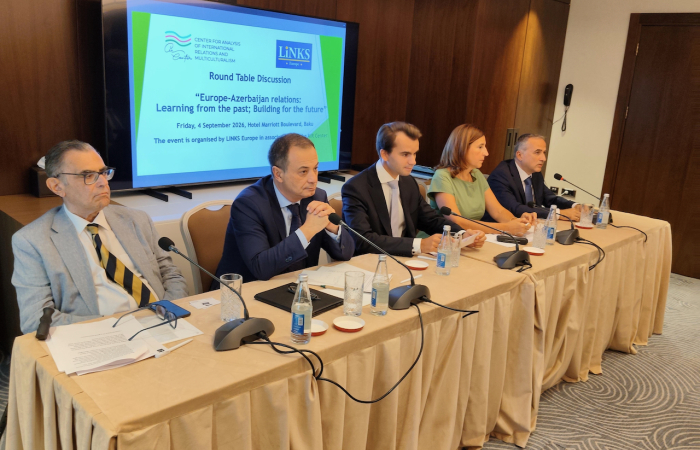
The Thematic Groups for a new Armenian-Azerbaijani Dialogue have produced four reports which set out a vision for relations between Armenia and Azerbaijan, and between Armenians and Azerbaijanis, over the next 15 years. The reports cover four key areas: (1) Peace and Security; (2) Regional Connectivity; (3) Good Governance; and (4) Environment. 42 Armenians and Azerbaijanis were directly involved in preparing the reports as part of the Thematic Groups. Another thirty Armenians and Azerbaijanis contributed to the process. The Thematic Groups were an initiative of LINKS Europe within the framework of EU4Peace 3, a programme supported by the European Union. An ACTION COMMITTEE FOR A NEW ARMENIAN AZERBAIJANI DIALOGUE has now been established, made up of the Chair and Deputy Chairs of the four groups that produced and agreed on the reports. The members of the Action Committee are: Murad Muradov, Leonid Nersisian, Narek Minasyan, Fidan Namazova, Sargis Kharatyunyan, Nigar Gurbanli, Aghavni Kharatyunyan, and Ramazan Samadov.  The first co-chairs of the Action Committee, for the 1st eight month semester are Murad Muradov and Leonid Nersisian. The Action Committee is responsible for the dissemination of the four reports, their eventual updating, and for contributing to the Armenian-Azerbaijani Dialogue and Peace and regional co-operation. LINKS Europe has appointed a Special Advisor to the Action Committee and will provide the Secretariat. The committee will work until December 2027. (click to title to read more or to download the reports)
Editor's choice
Event
commonspace.eu is getting better

commonspace.eu is getting better

Commonspace.eu will this year celebrate its 15th anniversary. In this period we provided space for different opinions, including to persons from the countries and areas we are focused on, which have included Georgians, Armenians, Azerbaijanis, Yemenis, Ukrainians and many others. We have also, as much as is possible for a news outlet that does not have a network of paid journalists, provided accurate information, especially at times of crises. We have done so whilst remaining inspired by our vision for a just and peaceful world, of a Europe that works in peace and collaboration with its neighbourhood, and to give a voice to youth, women, minorities and other groups that struggle to be heard. This week we are launching new features, and strengthening established ones, to make commonspace.eu more effective, and more useful for our eclectic readership. On Thursday, we launch our new series, THURSDAY INTERVIEW. The interviews will be conducted by Lauri Nikulainen, and the first interview is with Murad Muradov, Vice President of the Topchubashov Centre in Baku. On Friday we will have a selection from our regular newsletters: Caucasus Concise, Arabia Concise and Central Asia Concise. We hope to add a fourth newsletter shortly. On Monday, the Monday Commentary by our Managing Editor, Dr Dennis Sammut, is back. The commentaries reflect the author’s years of experience, but equally his passion for change and a better world. On Tuesday and Wednesday, we feature articles by our regular guest contributors, including Onik Krikorian, Benyamin Poghosyan and Vasif Huseynov. We will of course also feature daily news stories from Europe, and the regions around it, the neighbourhood with which we need to build a common future. We hope that you will find commonspace.eu interesting and useful.
Editor's choice
Event
LFSC25: Yerevan meeting focuses on issues of landmines and remnants of war in Armenia and the South Caucasus

LFSC25: Yerevan meeting focuses on issues of landmines and remnants of war in Armenia and the South Caucasus

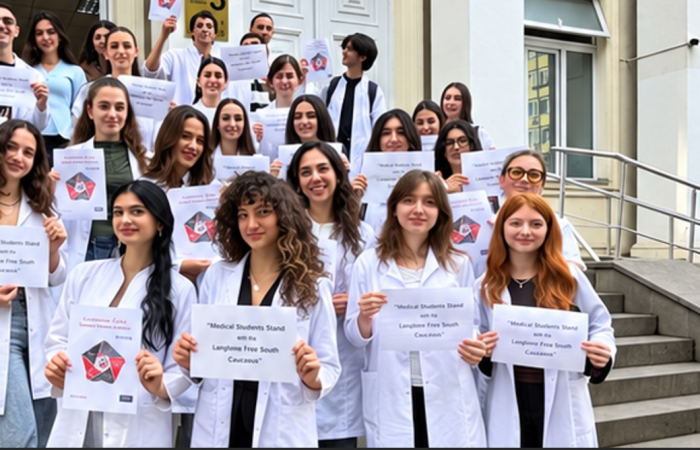
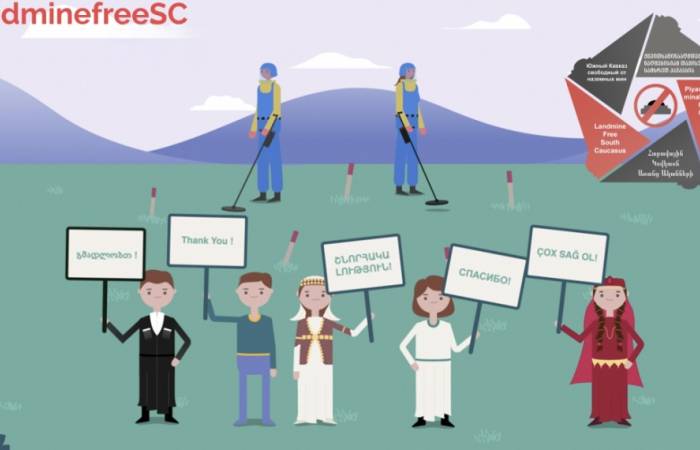
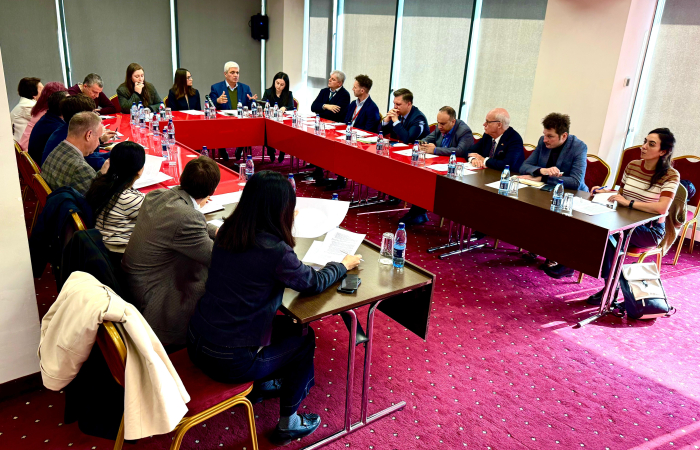
The meeting titled “The residue of conflict: Landmines and other remnants of war in the South Caucasus, and its victims” was held in Yerevan, Armenia, on Monday, 24 November 2025, in the framework of the 2025 regional campaign "Landmine Free South Caucasus" (LFSC25). Addressing the meeting, Mr Stepan Grigoryan, Chairman of the Armenian Analytical Center on Globalisation and Regional Cooperation, emphasized that the problem of landmines is mutual, and it exists in both Armenia and Azerbaijan. He argued that it is important in the peace process to address the humanitarian issues caused by landmines. In addition, he also stressed that it is important for experts to have conversations on the topic of demining, as often it is experts who begin the process that can then be taken further by governments. Stepan Grigoryan said he was happy to be collaborating with LINKS Europe on this important issue, and was glad to associate himself with the LFSC 25 appeal. Anahit Poghosyan, Adviser to the Secretary of the RA Security Council also spoke at the event. Ms Anahit Poghosyan said that the problem of landmines exists in Armenia, and that already around 800 people have been injured or killed due to landmine contamination. The border regions are highly affected, and around 200000 people live in proximity of contaminated areas. She stressed that landmine contamination is an important issue to solve. In addition, she added that Armenia remains committed to humanitarian principles and that experts have been involved in checking the contamination maps to ensure reliability. She ended on an important note that landmines undermine peace and development and pose a grave humanitarian situation in the region. (read more by clicking the image)

Focus on Central Asia

Focus on Arabia

Editor's choice
News
Aden under curfew, as problem in Yemen's south deepens

Aden under curfew, as problem in Yemen's south deepens

The port city of Aden, in Yemen's south, has been put under curfew, as the rift in the country between  the Saudi led coalition which  backs Yemen's presidential governing council, and the southern forces led by the Southern Transitional Council (STC), deepens. Abdul Rahman al-Mahrami, a member of the Yemeni Presidential Governing Council and commander of the al-Amalik brigades, has ordered a curfew in the temporary capital, Aden, "to maintain security". "A curfew has been imposed throughout Aden Governorate from 9:00 p.m. to 6:00 a.m., in accordance with the instructions of Commander Abdul Rahman al-Mahrami, a member of the Presidential Management Council," the statement said. It states that only security and military personnel, as well as medical and technical teams with approved permits, will be allowed to move in the area during these hours. Yemen's presidential council, which is backed by Saudi Arabia and which already is in a struggle with the Houthi Movement in the north of the country who also occupy the capital Sanaa, two days ago issued an order for the arrest of the head of the Southern Transitional Council (STC),, Aidarous al Zubaidi. The STC have wide support among people in the South, and advocate that South Yemen restores its independence. The coalition warned of further escalation in Aden, long regarded as an STC stronghold, as the Presidential Leadership Council (PLC) chief accused STC leader Aidarous Al Zubaidi of “high treason” and announced the revocation of his membership in the governing body. The moves mark a sharp escalation in tensions within the anti-Houthi camp, despite National Shield Forces, rivals of the STC and former allies, having recently retaken control of Hadhramaut and Mahra from southern fighters. The STC’s takeover of the two regions last month angered Saudi Arabia and contributed to igniting the current internal conflict. (click the picture to read more)
Editor's choice
Analysis
Briefing: In the Gulf, the British “peace” ended sixty years ago, but the Saudi “peace” has not yet replaced it

Briefing: In the Gulf, the British “peace” ended sixty years ago, but the Saudi “peace” has not yet replaced it

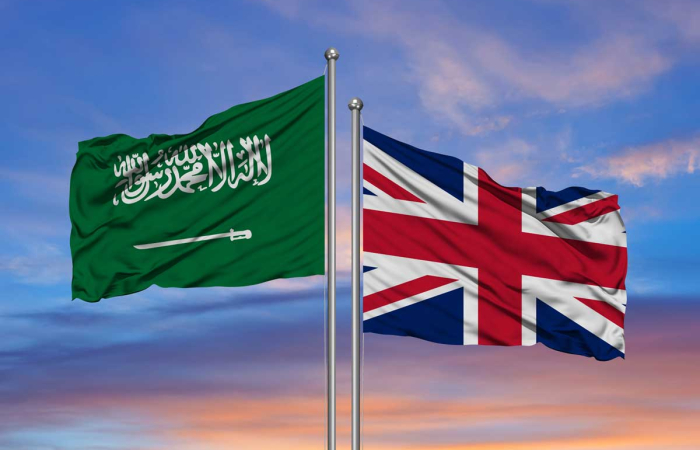
Relations between the Kingdom of Saudi Arabia and the United Arab Emirates have in the last decade, been competitive. Led by two ambitious but visionary men – both named Mohammed: MBS – Mohammed bin Salman, the Crown Prince of Saudi Arabia; and MBZ – Mohammed bin Zayed, the Ruler of Abu Dhabi and president of the Emirates, the two Gulf neighbours embraced many aspects of modernity, and moved hurriedly to turn their countries into global vanguards", writes Dennis Sammut, in this Briefing for Arabia Concise. "Yet up to now, competition was kept within bounds. They cooperated closely in areas of security and presented a united front. They were on the same side when they confronted Qatar and in their opposition to the Houthis' takeover of Yemen. Yet problems had been brewing under the surface for a while, and in the last month they burst into the open." The relations between Saudi Arabia and the United Arab Emirates (UAE) have been increasingly strained as a result of the different approaches of the two countries towards Yemen. The problems between Saudi Arabia and the Emirates are not new. The Kingdom was never happy with the existence of the smaller states on the Arabian peninsula, which, for most of the 20th century, had British “protection”. But the wisdom of MBZ’s father, Sheikh Zayed, the founder of the UAE, and the caution of MBS's uncles, who ruled Saudi Arabia, generally managed the problems outside the public eye. When the British peace ended abruptly in the 1960’s – the British ran out of money – many thought that the Saudi peace would replace it. Sixty years later, it still has not. not only in monetary terms, but also diplomatically. Saudi “Peace” may be tempting, but it comes at a price. The UAE remains vulnerable because of its size, demography and geography; Its wealth may protect it for a while, but it has its limits. The decision of the UAE to break ranks and recognise Israel may have endeared it to the United States. But many inside, as much as outside the country, are not convinced. (You can read the full Briefing by clicking the image above)
LINKS Europe

commonspace.eu is an activity of LINKS Europe Foundation, an independent foundation based in The Hague, The Netherlands. We focus on issues related to European peace and security, Europe's neighbouring regions, including Eastern Europe, the Caucasus and Central Asia; North Africa and the Sahel, the Horn of Africa and the Arabian Peninsula. LINKS Europe is committed to contributing to a better future by increasing understanding of complex foreign policy issues, by promoting dialogue and confidence-building as tools for helping to resolve conflict, and by engaging citizens in the process of building peace and security on the basis of solidarity and mutual respect. Through commonspace.eu, we aim to provide insights and analysis on different topics in our area of interest and a platform for diverse opinions.

Read LINKS Europe's work programme for the two-year period 2024-2025 here